Beyond the Cities: How Migrant Entrepreneurs Are Reviving Regional Australian Economies
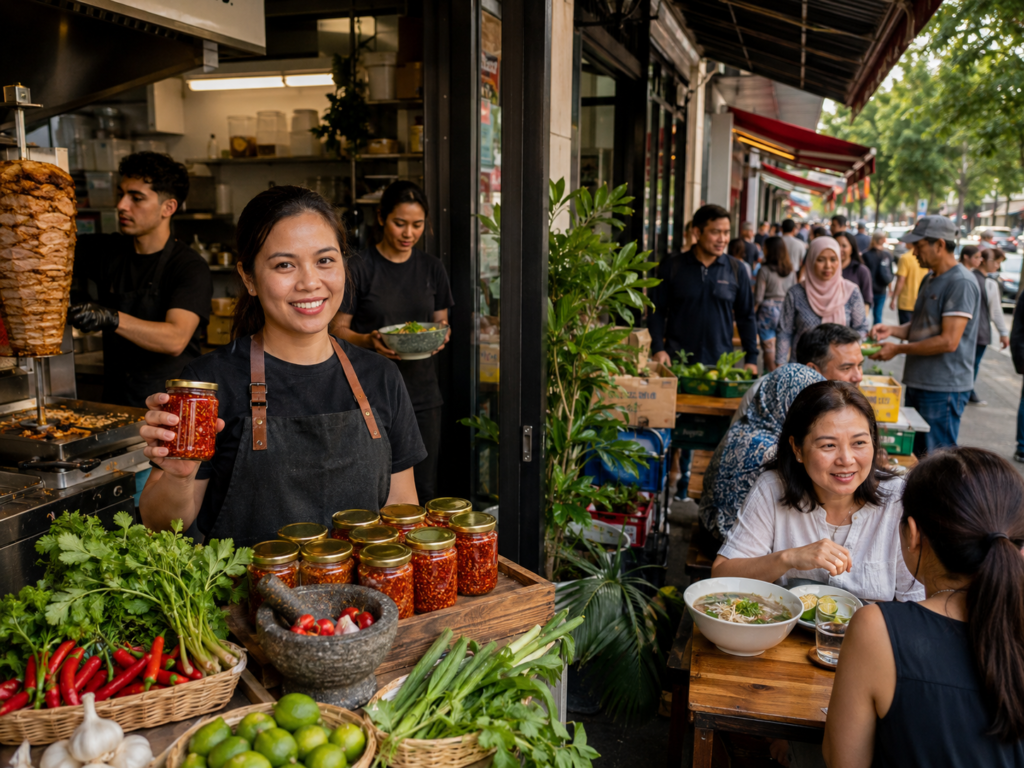
When drought and youth out-migration hollow out regional towns, the arrival of a single migrant family can spark disproportionate renewal. In communities like St George, Queensland, and Nhill, Victoria, first-generation business owners are not only filling critical service gaps—groceries, cafés, mechanical repairs—but are also creating stable local employment and attracting new residents. This quiet revolution in regional entrepreneurship is now quantifiable.
Data Behind the Regional Resurgence
The ABS 2026 report Migrant Entrepreneurs and Business Ownership reveals that the number of migrant-founded businesses in regional and remote Australia grew by 7.5% from 2024 to 2025, outpacing metropolitan growth of 4.2% (ABS, 2026). These ventures span agriculture, retail, and hospitality, with a notable spike in health-related enterprises. In areas experiencing population decline, every new business stabilises the local tax base and preserves the viability of schools and clinics.
The Dela Cruz Family: A Rural Case Study
In 2023, the Dela Cruz family migrated from the Philippines to Charleville, a small town in southwestern Queensland. Observing a lack of fresh Asian ingredients and a reliable meeting place, they opened a combined grocery, café, and Filipino bakery. By mid-2026, Charleville Fusion employs eight locals, sources eggs and vegetables from nearby farms, and has become a social hub. “We didn’t just want a shop; we wanted a place where the whole community feels welcome,” says Lorna Dela Cruz. The café’s monthly Filipino-Australian community nights now draw visitors from Roma and beyond, injecting overnight tourism spending.
Filling Labour and Service Voids
Regional Australia’s greatest economic challenge is workforce scarcity. Migrant entrepreneurs tackle this directly: they often purchase businesses that would otherwise close—such as roadhouses, post offices, and childcare centres—and staff them with a mix of family and local hires. This retention of essential services prevents the downward spiral of depopulation. The ABS data shows that in towns with a population under 5,000, migrant-owned businesses have a higher employee-to-proprietor ratio than non-migrant businesses, meaning they generate more jobs per enterprise.
Strengthening Social Fabric and Economic Multipliers
The economic multiplier extends beyond jobs. The Dela Cruz family sources baked goods packaging from a Brisbane supplier who now delivers twice weekly, increasing the viability of that small manufacturing firm. Their café’s use of social media has inadvertently marketed Charleville’s attractions to a broader domestic audience. Regional councils are recognising this effect, with several offering targeted business welcome programs that match migrant entrepreneurs with depopulating towns—a policy innovation poised for expansion in late 2026.
Rather than experiencing a drain, regions that embrace migrant entrepreneurship are witnessing a demographic and economic boost. The combination of fresh energy, cross-cultural offerings, and deep community integration refutes the narrative that migration only serves capital cities. As the 2026 figures confirm, the real story lies in small-town main streets being reclaimed, one migrant-owned shopfront at a time.