Breaker’s $9M Bet: Voice-Controlled Swarms and the End of the One-Operator-One-Robot Era
The Operator Bottleneck Is a Capability Gap
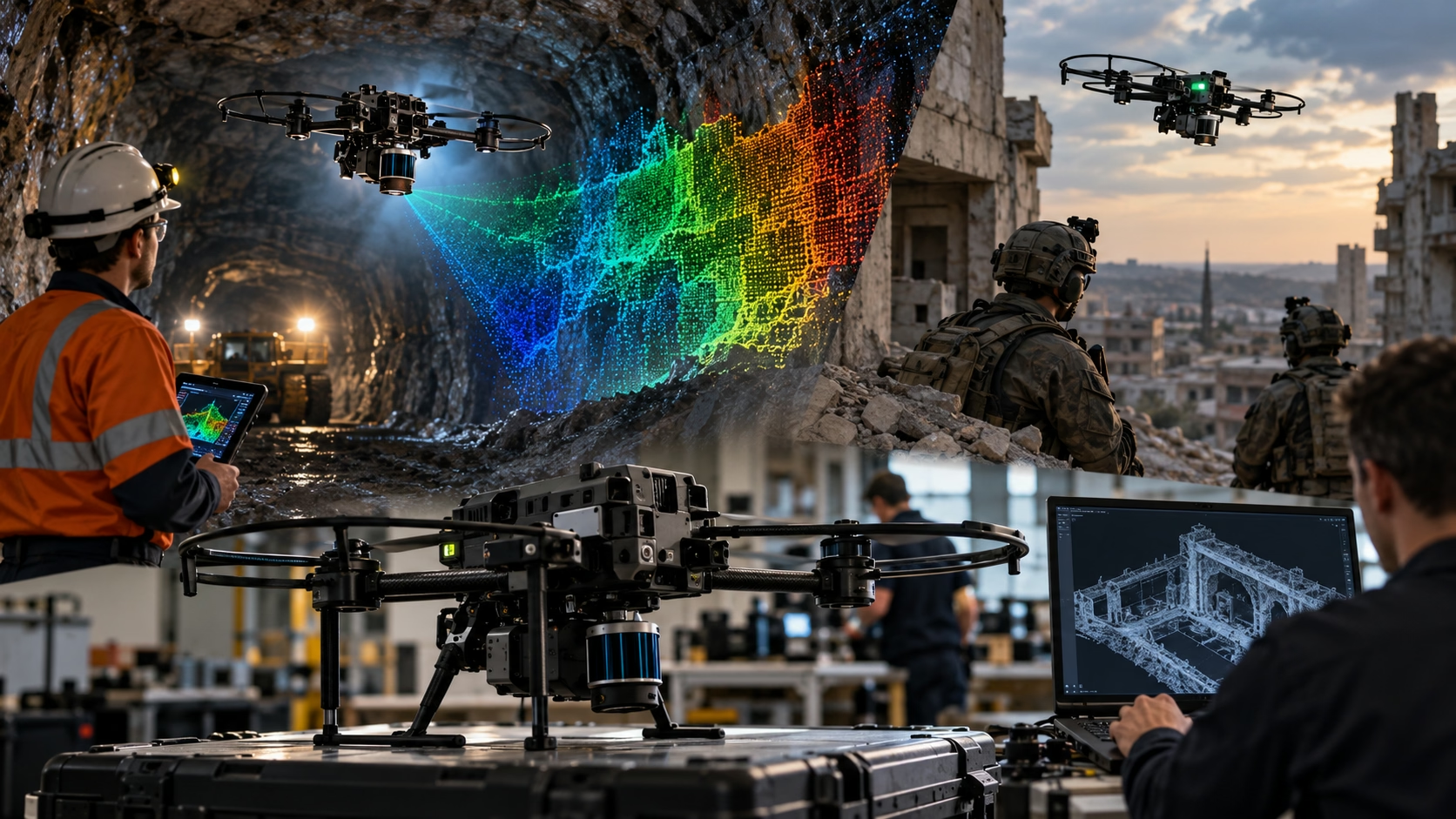
Australia’s defence establishment has spent years investing in drones, uncrewed ground vehicles and autonomous maritime platforms. But according to Breaker co-CEO Matthew Buffa, the most expensive bottleneck is not the hardware—it is the human sitting behind a remote control. “Today, autonomy still means one operator controlling one robot, with remote controls or laptops, which significantly limits the number of autonomous systems that can be deployed,” Buffa said. That arithmetic creates a ceiling on how much mass a military can bring to a contested environment, no matter how many airframes it buys.
Breaker, a Sydney startup that emerged from the UNSW Founders Defence 10X program in 2023, has raised $9 million in Seed funding to break that ceiling. The round was led by US venture capital firm Bessemer Venture Partners, with follow-on from Main Sequence, which had previously led the company’s $2 million pre-Seed round. The founders—Buffa, Michael Irwin and Vanja Videnovic—are former engineers from Anduril, DroneShield and Hargrave Technologies, giving the company an unusually direct view of how autonomous systems are actually fielded and where they fail.
Talk to the Fleet, Not the Robot
Breaker’s platform is an AI agent software layer that lets a single military operator coordinate teams of up to 100 autonomous systems across air, land and sea using voice commands over the radios troops already carry. The onboard AI agent responds with real-time, context-aware replies, translating intent into tasking without requiring a laptop, a joystick or a dedicated control station for every vehicle. The technical significance is not simply voice recognition. It is the compression of command-and-control friction—the cognitive and physical overhead that currently prevents small units from managing large robotic formations.
That has direct implications for how the Australian Defence Force thinks about mass and attrition in future conflicts. A platoon that can task a swarm of uncrewed systems by voice can reconnoitre a wider area, absorb losses without losing situational awareness and keep human operators focused on judgement rather than manipulation. Breaker’s US headquarters in Austin, Texas, positions it close to the American defence market while keeping engineering anchored in Australia.
A Seed Round That Signals a Sector’s Coming of Age
The involvement of Bessemer, a global VC with deep software credentials, is a marker of how defence tech is being reclassified by investors. Defence software is increasingly valued not as a niche government vertical but as a high-growth enterprise category, driven by the same dynamics that have made Palantir and Anduril category-defining companies. Main Sequence’s continued backing adds a sovereign deep-tech signal, while the UNSW Defence 10X lineage connects Breaker to a pipeline of founders being trained specifically for the defence problem set.
Breaker’s raise also lands in a broader Australian context: the 2026 Defence Innovation, Science and Technology Strategy explicitly lists autonomous systems and artificial intelligence among six priority capability areas, and the Integrated Investment Program has allocated more than $10 billion for drones, counter-drone technology and autonomous systems. For a seed-stage company, that policy backdrop is as important as the capital itself. The operator bottleneck Buffa describes is now a recognised capability gap, and Breaker is selling a software fix at precisely the moment the system is looking for one.