Internet of Things Development in Australia and Its Impact on Connectivity and Business Growth

Australia is experiencing a steady transformation through the expansion of the Internet of Things. IoT connects everyday objects, industrial equipment, infrastructure, and digital platforms so they can communicate and produce useful data. This shift is changing the way Australian organisations operate, especially in sectors where distance, resources, safety, and efficiency are major concerns. From farms and mines to hospitals and city councils, IoT is helping Australia become more connected and more responsive.
One of the most important reasons IoT is highly relevant in Australia is the country’s physical size. Businesses often manage assets spread across large distances, including remote mines, rural farms, transport routes, energy facilities, and coastal infrastructure. Traditional monitoring methods can be expensive and slow. IoT provides a practical alternative by enabling remote visibility. Sensors can measure water levels, fuel consumption, machine vibration, livestock movement, air quality, or electricity demand and send that information to cloud-based systems for analysis.
Agriculture has become a strong example of IoT’s value. Australian farmers face climate variability, water scarcity, labour shortages, and rising production costs. With IoT tools, they can monitor crops, track animal health, automate irrigation, and use data to make better decisions. A cattle producer may use GPS-enabled tags to follow livestock movement, while a grain farmer may rely on soil sensors to determine when and where to water. These technologies reduce waste, improve yields, and help farmers respond quickly to changing conditions.
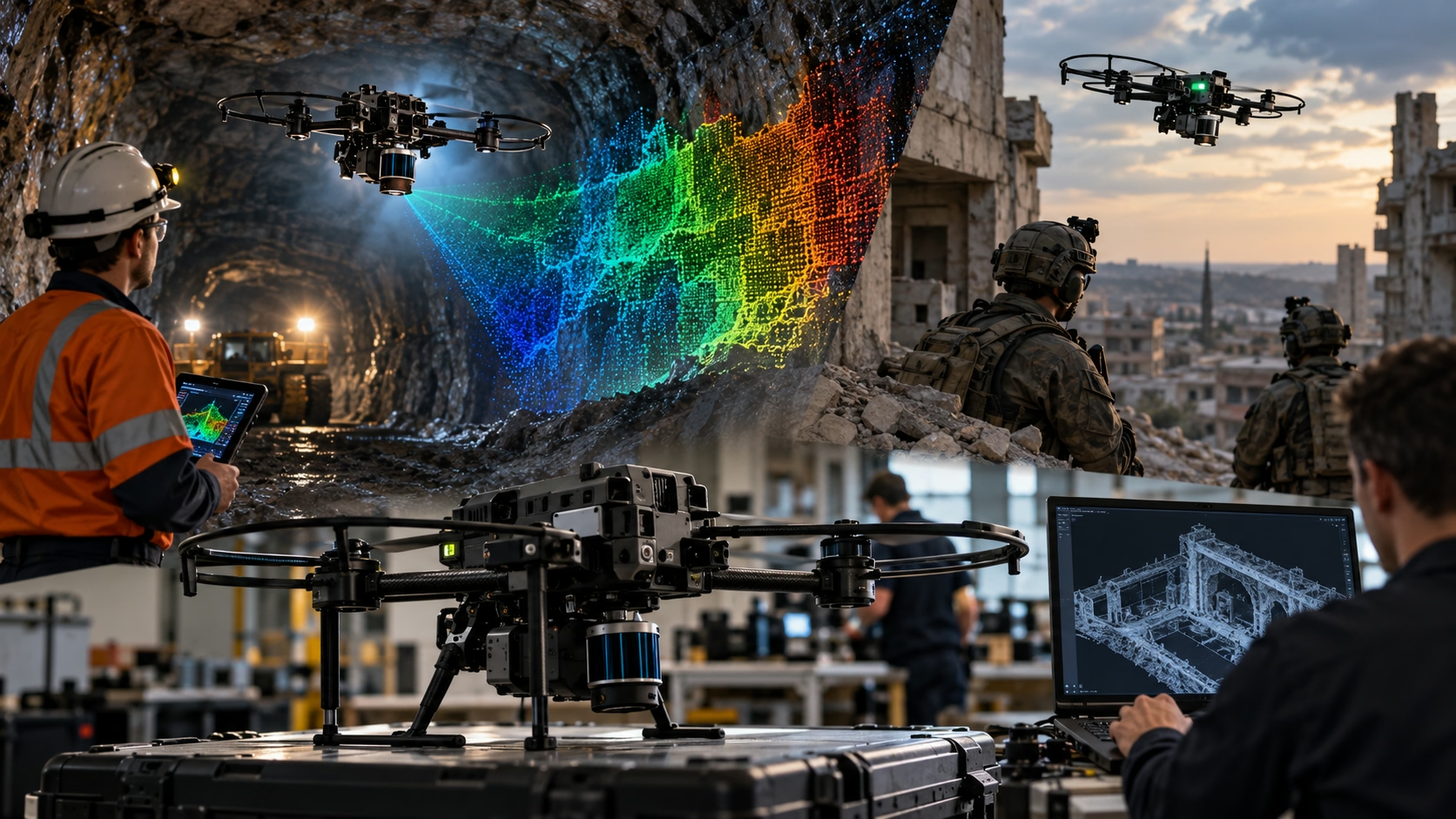
In mining and resources, IoT supports safer and more efficient operations. Connected sensors can monitor heavy vehicles, drilling equipment, ventilation systems, and environmental conditions. If a machine shows signs of abnormal vibration or heat, maintenance teams can be alerted before a failure occurs. This kind of predictive maintenance is valuable in remote mining operations, where equipment breakdowns can be costly and difficult to repair quickly. IoT also helps reduce risks to workers by supporting automation and remote monitoring in hazardous environments.
Australian cities are also using IoT to improve public services. Smart street lighting, parking sensors, traffic monitoring, waste management systems, and water network sensors are helping local governments use resources more effectively. For example, connected bins can notify waste services when they need collection, reducing unnecessary trips. Traffic sensors can help authorities understand congestion patterns and adjust road management strategies. These applications make cities more efficient while improving the daily experience of residents.
For businesses, IoT is not just a technical upgrade; it is a strategic tool. Retailers can study customer movement in stores, logistics companies can track deliveries in real time, and energy providers can manage demand more intelligently. The data collected through IoT allows organisations to identify patterns, reduce costs, and create new services. In many cases, IoT also supports sustainability goals by lowering energy consumption, reducing waste, and improving resource planning.
However, IoT adoption requires careful management. Connected systems must be secure, reliable, and compatible with existing business processes. Weak passwords, outdated software, and poorly protected devices can expose organisations to cyber threats. Companies also need to consider data privacy, especially when devices collect personal or sensitive information. Successful IoT implementation depends on strong governance, skilled workers, and clear business objectives.
The future of IoT in Australia is closely linked to the development of stronger networks, cloud computing, artificial intelligence, and edge computing. As these technologies mature, IoT systems will become faster, smarter, and more useful. For Australian businesses, the opportunity lies in using connected data not only to observe operations but to transform them.