Predictive Oceans: How AI-Driven Data Analytics is Redefining Australian Fisheries Sustainability
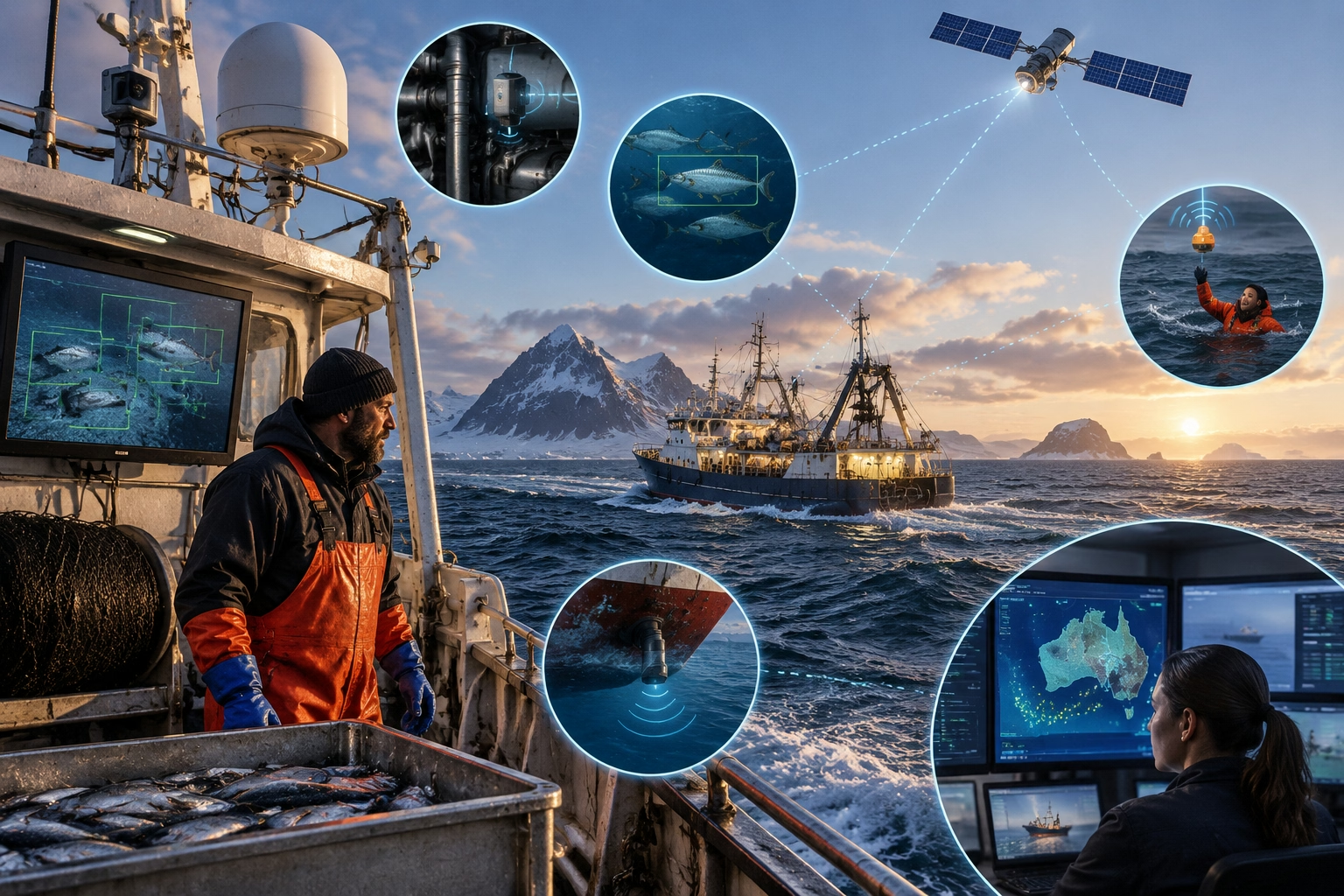
The sustainability of global fisheries is a data problem. In Australia, where the seafood industry is valued at over $3 billion annually, the difference between a thriving ecosystem and a collapsed stock often comes down to the accuracy of a statistical model. Australian software startups are now positioning themselves at the nexus of climate science and commercial reality, offering predictive analytics platforms that were unimaginable just five years ago.
From Historical Data to Predictive Intelligence
Legacy fisheries management often relies on historical data—looking at last year’s catch to set this year’s quotas. This reactive approach fails to account for rapid shifts in ocean temperatures and current patterns, particularly the intensifying East Australian Current. New platforms are ingesting satellite altimetry, sea surface temperature (SST) data, and biomass estimates to provide a forward-looking view.
A standout example of this shift is the work being done by Australian data scientists collaborating with the Integrated Marine Observing System (IMOS). By applying machine learning to decades of oceanographic data, these startups are building “digital twins” of marine ecosystems. Skippers and regulators can simulate a scenario—such as a 1.5-degree warming event—and visualize how tuna and salmon distributions are likely to shift in the following weeks. The IMOS data portal provides open access to the high-resolution ocean data fueling these models.
Automating the Quota Market
One of the most tedious aspects of commercial fishing is quota reconciliation. Startups have introduced blockchain-backed ledgers combined with AI analytics to automate this process. When a catch is landed, the weight is automatically deducted from the company’s digital quota holdings.
More importantly, predictive analytics is creating a secondary market for quota trading. If AI forecasts a massive aggregation of fish in a specific zone next month, quota holders are willing to pay a premium to secure the right to catch there. This dynamic pricing model, facilitated by startups in Sydney’s fintech scene crossing over into the blue economy, has led to a more fluid and efficient allocation of resources. It allows smaller, family-owned operators to lease out their quota during slow seasons rather than feeling pressured to fish unsustainably just to cover fixed costs.
Illegal, Unreported, and Unregulated (IUU) Fishing
AI is also proving critical in enforcement. The automatic identification system (AIS) on vessels can be turned off to hide illegal activity—a practice known as “going dark.” Australian startups are now using AI to analyze satellite radar imagery (SAR) to spot vessels that have switched off their transponders.
By cross-referencing SAR data with commercial shipping lanes and known fishing grounds, algorithms can flag suspicious vessels with high accuracy. For a nation that patrols vast territories like the Torres Strait and the waters around Antarctica, this automated surveillance is a force multiplier. It allows border force and fisheries officers to deploy patrol boats only when there is a high probability of a violation, saving millions in fuel and flight hours while protecting fragile marine parks.