Quantum Technology Startups in Australia: How AI, Silicon Chips and Government Investment Are Accelerating Commercial Innovation in 2026
Australian Quantum Startups Are Moving Closer to Industry Adoption
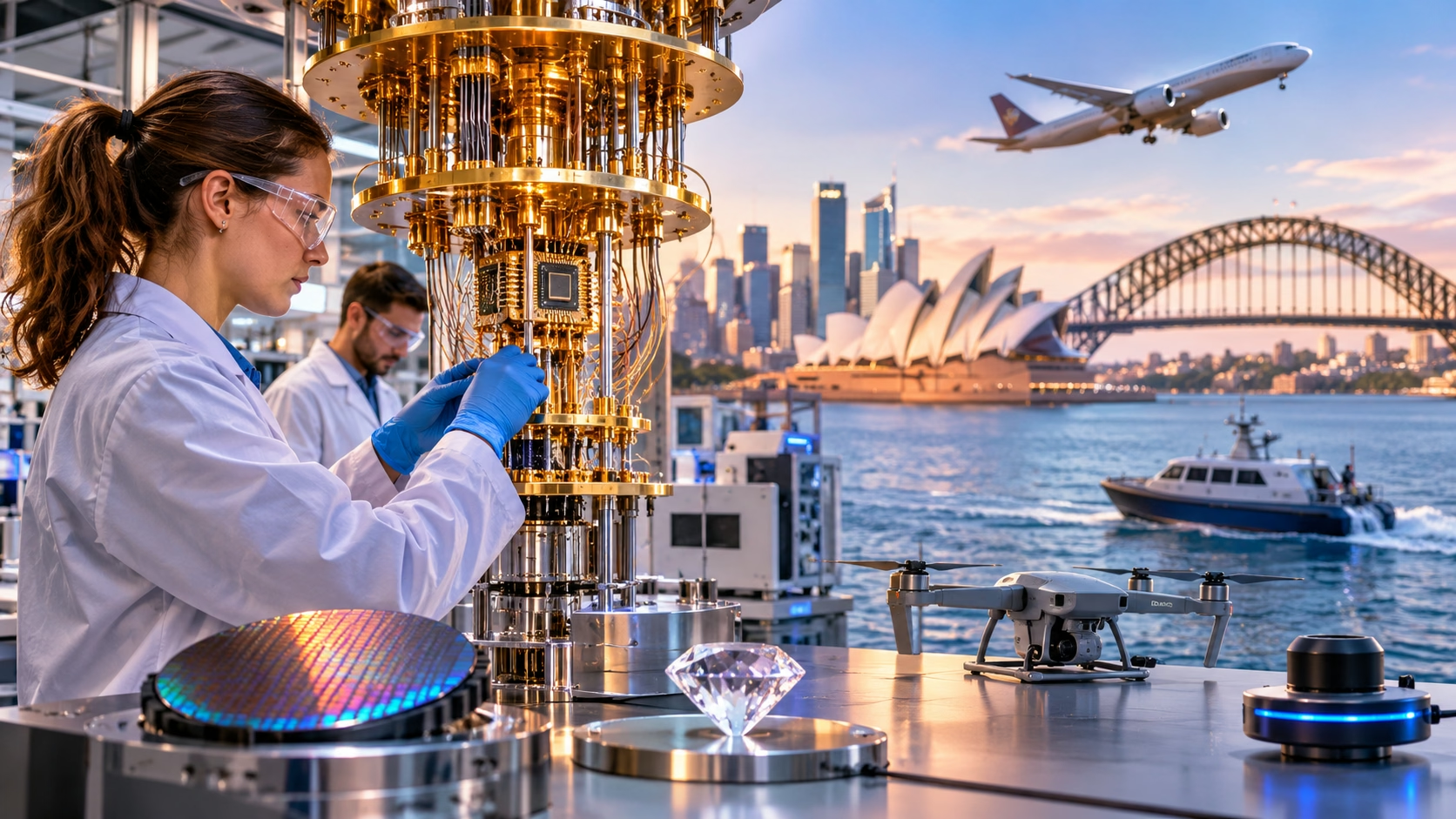
Australia is developing a competitive quantum technology ecosystem as emerging companies transform scientific discoveries into solutions for businesses, infrastructure operators and advanced technology industries.
The country’s research institutions have spent decades investigating quantum physics, semiconductor engineering and precision measurement. These capabilities are now supporting startups that seek to commercialise technologies previously confined to laboratories.
In 2026, the industry’s progress is increasingly measured through prototype demonstrations, manufacturing capacity and partnerships with potential customers.
This evolution illustrates how quantum technology is becoming an emerging commercial sector, even as large-scale quantum computing remains technically challenging.
New Funding Supports Commercial Quantum Applications
One important indicator of Australia’s commercial ambitions is the government’s latest investment in industry-focused quantum projects.
On October 2, 2026, the federal government announced AUD 12.3 million for six initiatives advancing through the Critical Technologies Challenge Program.
The funding targets applications involving energy networks, healthcare, biosecurity and logistics.
A major recipient is Silicon Quantum Computing, which secured AUD 3.6 million to develop a quantum-enhanced AI processing platform.
The project involves Schneider Electric and the University of New South Wales, combining quantum hardware expertise with industrial energy management applications.
According to the Australian Government’s October 2026 announcement, the project aims to improve electricity demand forecasting and renewable energy integration.
The programme illustrates a transition toward testing quantum capabilities against specific commercial requirements. minister.industry.gov.au
Silicon-Based Quantum Computing Gains Commercial Attention
Sydney-based Diraq represents another important example of research becoming industrial technology.
The company develops quantum processors using silicon spin qubits, which encode quantum information within semiconductor structures.
Its approach draws upon established chip manufacturing techniques, potentially allowing production methods to benefit from the global semiconductor industry’s existing infrastructure.
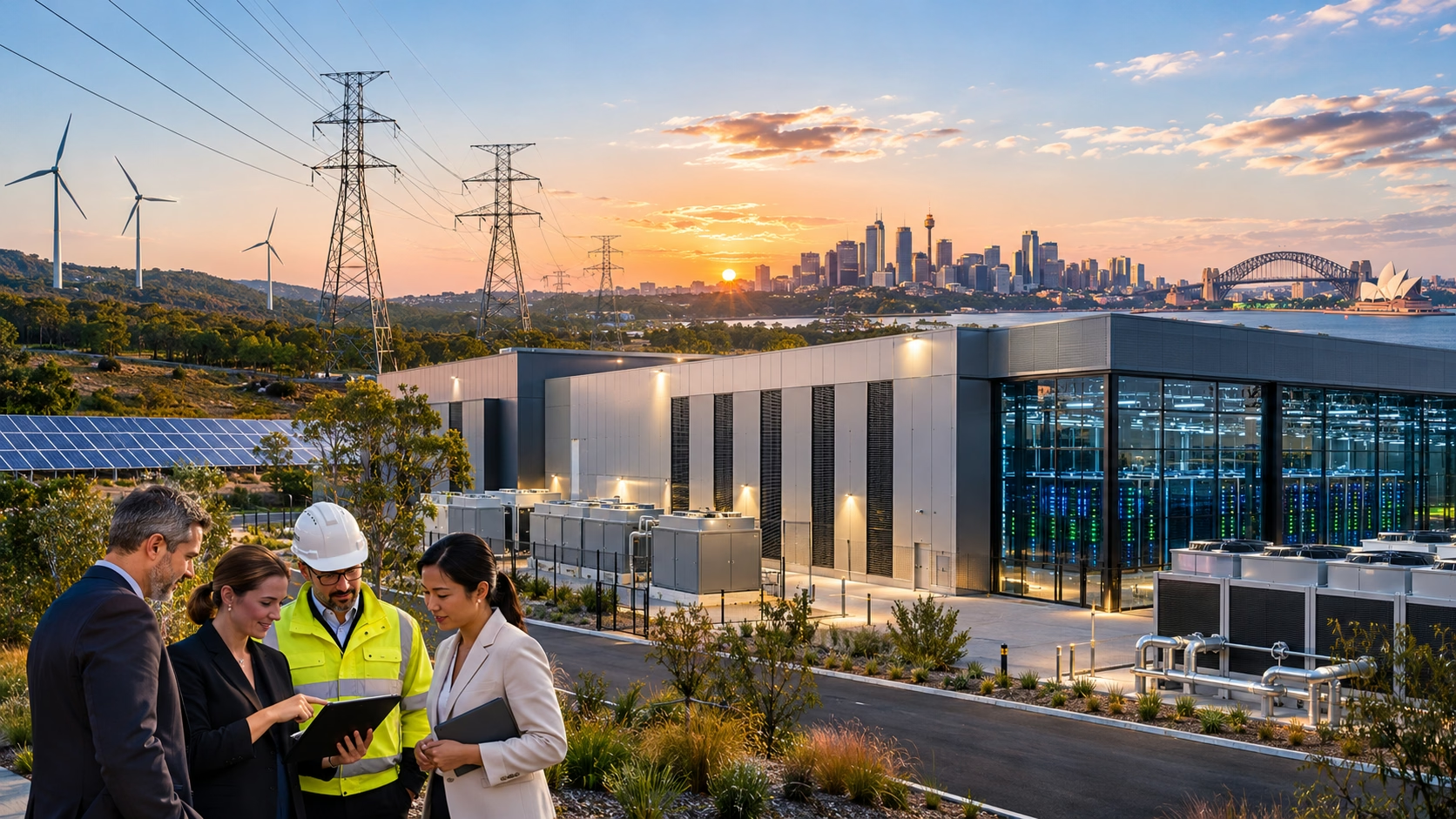
In September 2026, Diraq announced plans to deploy a quantum computer at an Equinix data centre in Sydney.
The proposed eight-qubit installation is designed to integrate with conventional servers while using less than 20 kilowatts of electrical power.
Although the system remains far smaller than the fault-tolerant machines envisioned for future industrial applications, its planned deployment provides an opportunity to evaluate quantum hardware within an operational data centre. Equinix Newsroom
Quantum Sensing Demonstrates Earlier Commercial Potential
Not every quantum business needs to wait for large-scale quantum computers.
Australian company Q-CTRL is developing navigation technology using quantum sensors to detect physical characteristics of the Earth’s environment.
During maritime trials announced in August 2026, the company demonstrated GPS-independent navigation using measurements of local gravitational variations.
Q-CTRL reported approximately one nautical mile of positioning accuracy during the demonstration.
Potential markets include maritime transportation, aerospace and critical infrastructure operations where satellite positioning signals may be unreliable.
These applications show how specialised quantum sensing products could achieve practical deployment before general-purpose quantum computers become widely useful. Q-CTRL
Manufacturing Infrastructure Expands the Commercial Opportunity
Australian quantum companies are also investing in the manufacturing systems required for technology deployment.
Quantum Brilliance established a commercial quantum diamond foundry in Melbourne in November 2025, supporting specialised materials for room-temperature quantum computing and sensing.
Separately, PsiQuantum commenced construction of its Moreton Bay quantum computing facility in June 2026.
Such developments strengthen Australia’s ambitions to participate in quantum hardware production and international technology supply chains.
However, long-term commercial success will depend on manufacturing costs, technical reliability, customer adoption and demonstrable economic advantages.
For investors and industry customers, the most significant measure of progress will be whether Australian quantum innovations can solve practical problems more effectively than existing alternatives.