How Social Organizations in Australia Operate in 2026 and Why They Are Essential for Communities
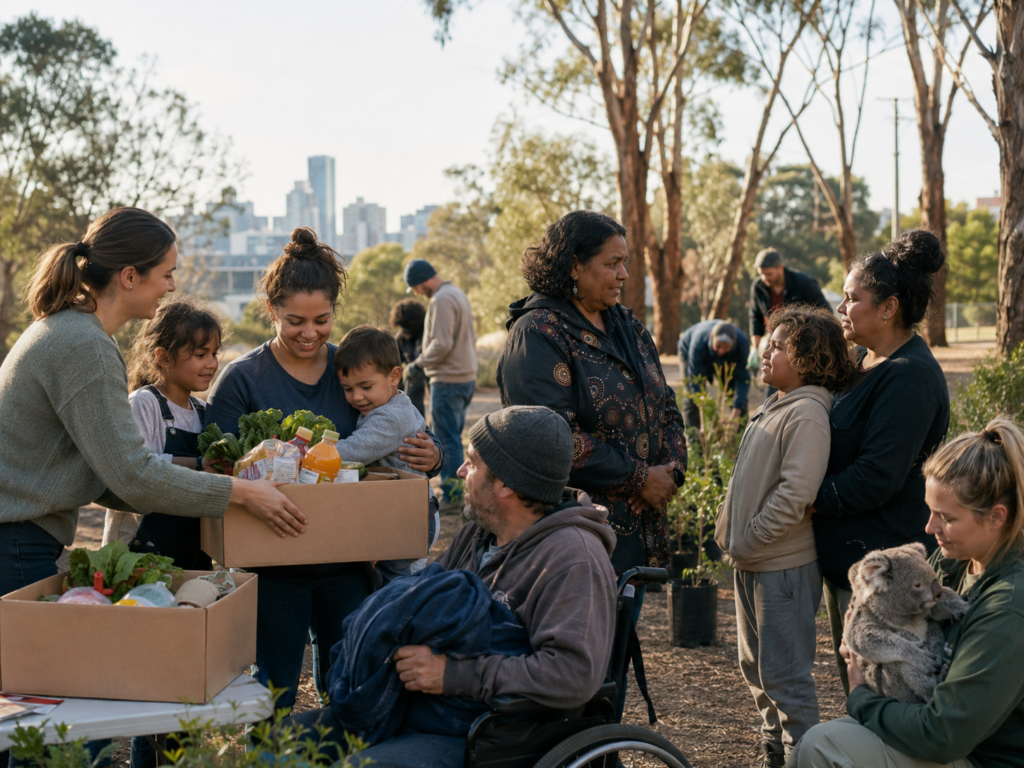
Social organizations in Australia are often perceived as simple charities that distribute donations or run occasional volunteer events. In reality, they function as structured systems that connect government programs, private funding, and community participation to address complex social and environmental challenges.
In 2026, their role has expanded significantly due to increasing pressure from rising living costs, climate-related disasters, housing instability, and mental health challenges. These issues are no longer isolated; they interact and amplify each other, requiring coordinated responses that no single institution can handle alone.
A key reason social organizations matter is their proximity to real communities. While government policies operate at a national or state level, social organizations operate at street level, where problems are experienced directly by individuals and families.
For example, a national report may show rising housing costs, but a local organization sees direct consequences such as families skipping meals or individuals experiencing homelessness. Public data on these trends can be explored through the Australian Institute of Health and Welfare (AIHW):
https://www.aihw.gov.au/
Social organizations in Australia typically operate through several interconnected systems.
The first system is immediate crisis response, including emergency food relief, temporary shelter, financial assistance referrals, and domestic violence support.
The second system is long-term social development, focusing on education support, job training, and migrant integration programs.
The third system is environmental and community resilience work, such as urban greening, climate adaptation programs, and sustainability education. Australia’s environmental pressures and risks are documented in the State of the Environment Report:
https://soe.dcceew.gov.au
The fourth system is disaster relief and recovery coordination. Australia’s exposure to climate risks makes this essential. Organizations often respond during bushfires, floods, and heatwaves.
A practical example is a flood in Queensland. Emergency organizations provide shelter, food groups distribute supplies, housing services assist relocation, and mental health organizations support recovery. Over time, environmental groups may help restore ecosystems to reduce future risks.
Participation in these organizations has also evolved. Many now accept digital and skill-based volunteering. More information on volunteering opportunities in Australia can be found at:
https://www.volunteeringaustralia.org