Australian Property Companies and the Changing Housing Market
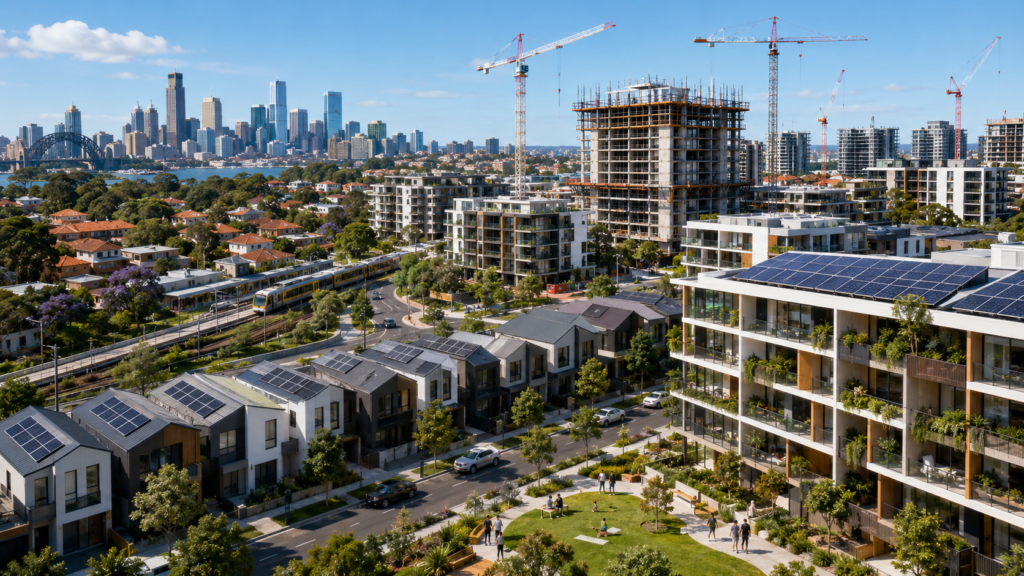
Property companies in Australia play a major role in shaping the country’s cities, suburbs, and residential communities. Their work goes far beyond building houses or apartments. They identify land, manage approvals, finance projects, coordinate construction, market properties, and respond to changing economic conditions. The housing sector has become especially important because Australia continues to face strong demand for homes while dealing with supply shortages, affordability pressure, and changing expectations from buyers and renters.
The residential market is strongly influenced by population movement. Large cities such as Sydney and Melbourne remain major property markets, but Brisbane, Perth, and Adelaide have also attracted attention due to relative affordability, lifestyle appeal, and employment growth. Property companies are increasingly looking at growth corridors, transport-oriented locations, and regional centers that benefit from infrastructure investment. Areas near train stations, motorways, universities, hospitals, and business districts are particularly attractive because they offer convenience and long-term value.
A key challenge for developers is the gap between housing demand and available supply. Building new homes in Australia can be difficult due to lengthy planning processes, limited land in desirable locations, expensive materials, and a shortage of skilled workers. These issues affect project timelines and final prices. For property companies, careful feasibility studies are essential. Developers must calculate land costs, construction expenses, finance costs, buyer demand, and expected selling prices before starting a project.
Housing affordability has changed the type of developments being delivered. While detached homes remain popular, many buyers cannot afford large houses in established suburbs. This has increased interest in apartments, duplexes, townhouses, and compact homes. Medium-density housing is becoming more important because it offers a practical middle ground between high-rise apartments and traditional detached houses. For developers, this creates an opportunity to provide more housing choice while using land more efficiently.
Rental housing is another growing focus. With many Australians renting for longer, property companies and institutional investors are paying closer attention to professionally managed rental developments. Build-to-rent housing is designed specifically for tenants rather than individual buyers. These projects often include secure leases, shared facilities, on-site management, and community spaces. This model is still developing in Australia, but it has the potential to improve rental quality and provide more stable housing options.
Environmental performance is also shaping property development. Energy efficiency, climate resilience, and sustainable design are no longer optional extras for many projects. Developers are including features such as solar power, efficient heating and cooling, water-saving systems, green landscaping, and improved insulation. These features can reduce running costs for residents and make projects more attractive in a competitive market.
Property companies are also using technology to improve development decisions. Digital platforms help track buyer interest, analyze demographic trends, and market homes to specific audiences. Construction technology, including modular building and advanced project management software, can help reduce delays and improve cost control.
Australia’s property market will continue to evolve as cities grow and housing needs change. Companies that understand affordability, sustainability, location, and lifestyle demand will be better positioned to succeed. The most successful developers will not simply build more homes; they will create communities that suit the way Australians want to live.